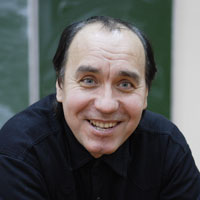


On May 29, 2025, my scientific article on the theory of subjective reality generation, the theory of the brain's existome, was published in the largest American scientific journal "ClinicSearch: Journal of Biomed Research".:
The theory of the brain’s existom as a theory of generating subjective reality: a hypothesis of a new biomedical approach to the brain* | ClinicSearch;DOI:10.31579/2834-5029/79 : : https://www.clinicsearchonline.org/article/the-theory-of-the-brains-existom-as-a-theory-of-generating-subjective-reality-a-hypothesis-of-a-new-biomedical-approach-to-the-brain
Artificial intelligence is likely to operate on qualitatively different principles than those developed within the framework of the principles and theory of neural networks. It must be remembered that the brain is not only the activity of neural networks, but also the product of the most complex networks and layers of nanomolecular machines. According to the theory of the brain's existome, developed by me, neural networks only program the activity of the brain's intention, which is part of the structure of the brain's existome and other brain structures. Neural networks themselves (connectome) are not the substrate and carrier of our subjective reality and mental contents. The carrier is the exist.
The following article is just one of the continuations of the above published article.
Abstract. The article analyzes the thesis that the physicist, chemist, biologist, and neurophysiologist do not create matter “out of nothing,” but merely transform a certain primary givenness. It is shown that the generation of an electron in nuclear physics is a transformation of already existing fields and particles, not creatio ex nihilo. The highest form of emergence—subjective reality—has no generally accepted formula; however, candidate theories exist: integrated information theory, global workspace theory, predictive processing, the dynamic core, and neurophenomenology. The concept of the “brain existome” is introduced and discussed as a hypothetical “genome” of subjective reality. R. R. Garifullin’s theory of the brain existome is analyzed. The question is raised about the limits of a system’s self-knowledge: can consciousness, which created mathematics and the sciences, describe the laws of its own emergence? The conclusion is drawn: science can create conditions, correlates, and technologies for modulating subjectivity, but the absolute generation of the subjective from the non-subjective remains metaphysically and epistemologically problematic. The primary givenness is Being, which in its development comes to knowledge of itself.
Keywords: emergence, subjective reality, consciousness, existome, brain existome, Being, self-description, integrated information theory, neuroscience, philosophy of mind.
Introduction
When a physicist says that he can generate an electron according to the open laws of nuclear physics, this is not entirely true. A physicist can only generate an electron from other elementary particles, and the physicist cannot generate the very matter of the particle or wave from which the elementary particles are woven. There is something primary that cannot be generated according to the laws of physics. There is a matter that has always been there. This also applies to chemists, biologists, and neurophysiologists. They all work with some kind of reality and create atoms, molecules, viruses, cells, bacteria, and organs from it on the basis of emergence. The problem becomes more complicated when the higher emergence is considered - the generation of subjective reality based on the brain and its structures. Is there a theory according to which, based on the synthesis of some brain substrates at different levels of the hierarchy, emergence occurs, generating subjective reality? Are there certain formulas for the emergence and generation of subjective reality at the level of physics, chemistry, biology, neurobiology, etc.? After all, there is a genome in physics, which is a system of elementary particles, a genome in chemistry, which is the periodic table, a genome in chemistry, which is Butlerov's laws, a genome in biology, which is DNA, and, finally, whether there is a genome in subjective reality. Such a genome is the existome of the brain.
But how can mathematics and the laws created by human consciousness describe the very laws of the emergence of consciousness and subjective reality? Can a system generate itself and knowledge about itself based on tools generated by the system itself?
Can human subjective reality, having studied itself with the help of scientific instruments (mathematics, physics, chemistry, biology, neuroscience, etc.) generated by subjective reality itself, create a science generating subjective reality!
A person will never be able to generate the matter that makes up elementary particles, since matter will always be the source material. It is also a difficult problem to generate subjective reality from something that is not. Again, we come to the primary matter, to Being. There is something in the fundamental basis of subjective reality, and this is something Being, which in its development can learn to know about you, becoming a Being who knows about himself. Thus, science, which makes an attempt to create the generation of subjective reality, will always begin this work with something primary and initial, as a given, and that given Being. Within the framework of the theory of the brain's existome, which I developed, this is taken into account.
1. Literature Review
The problem of emergence goes back to the philosophy of the 19th–20th centuries. Already J. S. Mill and G. H. Lewes distinguished “resultants” and “emergents,” while C. D. Broad in The Mind and Its Place in Nature [1] formulated the classical version of emergent materialism. P. W. Anderson in “More Is Different” [2] showed that at each level of organization new laws arise that are not trivially reducible to the lower level. I. Prigogine and I. Stengers [3], H. Haken [4], G. F. R. Ellis [5], and P. Clayton [6] developed the ideas of self-organization, dissipative structures, and top-down causation.
The philosophy of mind of the 20th–21st centuries identified the “hard problem”: why are neural processes accompanied by subjective experience? T. Nagel [7] posed the question “what is it like to be a bat,” J. Levine [8] described the “explanatory gap,” and D. Chalmers [9; 10] formulated the hard problem. J. Searle [11] criticized reductionism, while D. Dennett [12] proposed an illusionist/functionalist interpretation. G. Tononi [13] developed integrated information theory (IIT) with the measure Φ, S. Dehaene [14] developed global workspace theory, and K. Friston [15] developed the free-energy principle. G. Edelman and G. Tononi [16] proposed the concept of the dynamic core, J.-P. Changeux [17] the concept of the neuronal man, and F. Varela, E. Thompson, and E. Rosch [18] enactivism. R. Penrose [19] and S. Hameroff [20] develop quantum hypotheses of consciousness.
The problem of self-description and recursion was examined by K. Gödel [21], A. Turing [22], and D. Hofstadter [23]. Biological self-reference was described by H. Maturana and F. Varela [24] as autopoiesis; N. Luhmann [25] applied this to social systems; T. Metzinger [26] to the neurophenomenology of the self. Ontological presuppositions go back to Aristotle [27], B. Spinoza [28], M. Heidegger [29], and A. N. Whitehead [30].
“Genomes” of levels in a broad sense are not literal DNAs, but generative matrices. In physics this is the system of elementary particles and fields of the Standard Model [31; 36; 37]; in chemistry, D. I. Mendeleev’s periodic system [31] and A. M. Butlerov’s theory of structure [32]; in biology, DNA [33; 34]. For subjective reality, such a matrix is not generally accepted in the literature; the theory of the brain existome, developed by R. R. Garifullin, claims this role [41; 42].
2. The Generation of an Electron and Primary Givenness
When a physicist says that he can generate an electron according to the known laws of nuclear physics, this is not quite so. In a pair-production reaction, a photon interacting with the field of a nucleus can turn into an electron and a positron, but this is not the creation of matter out of nothing. A physicist can generate an electron only from other elementary particles; moreover, the physicist cannot generate the matter of the particle or wave itself, out of which elementary particles are woven. In quantum field theory, fields are primary; particles are their excitations. The vacuum is not “nothing”: it is a state of the field. Consequently, there is something primary that is unreachable for generation according to the laws of physics. There is matter that has always been—or, more precisely, there is a existential givenness from which physics begins its description.
This also applies to chemists, biologists, and neurophysiologists. All of them work with a certain givenness and, on its basis, through emergence, create atoms, molecules, viruses, cells, bacteria, and organs. A chemist synthesizes a molecule from atoms, but does not create atoms ex nihilo. A biologist assembles a virus from proteins and nucleic acids, but does not create chemical elements. A neurophysiologist grows a cell culture, but does not create the matter of the cell out of nothing. The problem becomes more complicated when the highest emergence is considered—the generation of subjective reality on the basis of the brain and its structures.
3. Emergence and Its Levels
Is there a theory according to which, on the basis of the synthesis of certain brain substrates of different levels of hierarchy, an emergence occurs that generates subjective reality? Such theories exist, but they are not complete. IIT proposes a quantitative measure of integrated information, Φ [13], but does not explain why Φ is accompanied by qualia. The global workspace explains access to information, but not experience [14]. The free-energy principle describes the minimization of uncertainty, but not subjectivity [15]. The dynamic core [16], enactivism [18], and quantum models [19; 20] all provide correlates, conditions, or metaphors, but not a final formula.
Are there any formulas of emergence and the generation of subjective reality at the level of physics, chemistry, biology, neuroscience, and others? There is no universal formula. There are formalisms for order parameters, renormalization, nonlinear dynamics, network integration, and Bayesian inference. But a formula that would necessarily derive subjective experience from physicochemical and neural variables does not yet exist. This is precisely the “hard problem” [8; 9; 10].
4. Genomes of Levels and the Brain Existome
In a broad sense, one can speak of “genomes” of levels. The genome in physics is the system of elementary particles and fields that defines basic entities and interactions. The genome in chemistry is Mendeleev’s periodic system [31] and Butlerov’s laws [32], which define valence, structure, and reactivity. The genome in biology is DNA [33; 34], which defines the hereditary program. Finally, is there a genome in subjective reality? Such a genome, according to the theory of the brain existome, is the existome.
In this article, the form “existome” (masculine) is used, not “existoma.” The brain existome is not DNA and not a separate structure, but a dynamic hierarchical totality of material substrates, their connections, information patterns, and levels of organization, which, under a certain configuration, generates subjective states. It includes molecular, synaptic, cellular, network, systemic, bodily, and environmental levels. The existome is the generative matrix of subjectivity, an analogue of the genome for the world of experiences. Within the framework of the theory of the brain existome, developed by R. R. Garifullin, it is taken into account that science always begins with primary givenness—Being [41; 42].
5. The Essence of Ramil Garifullin’s Theory of the Brain Existome
R. R. Garifullin’s theory of the brain existome is an attempt to answer the question: what is the generative matrix of subjective reality? If in biology hereditary information is encoded by DNA, then in the world of the subjective the analogue of the genome is the existome—a dynamic, multilevel, existential-informational structure of the brain. The existome is not reduced to neurons, synapses, or mediators; it includes neurobiological substrates, their hierarchy, information patterns, bodily states, the lifeworld, meanings, values, relations, culture, and existential givenness. Subjective reality arises not as an arbitrary superstructure, but as an emergent result of the self-organization of the existome. At the same time, the existome does not create primary matter; it works with the givenness that is always already there—with Being. Consciousness in this theory is the way in which Being comes to knowledge of itself through the brain and the existome. Scientific tools (mathematics, physics, chemistry, biology, neuroscience) are themselves generated by subjective reality and therefore can describe the existome only partially, within the limits of recursive self-knowledge. The theory of the brain existome asserts: the absolute generation of the subjective from the non-subjective is impossible; what is possible is the generation of conditions, modulation, correction, and expansion of the existome. Practical consequences: psychotherapy, psychiatry, neuroengineering, education, and culture should work not only with symptoms and neural correlates, but also with the existential levels of the existome.
6. Mathematics, Consciousness, and the Self-Description of a System
But how can mathematics and the laws created by human consciousness describe the very laws of the emergence of consciousness and subjective reality? Mathematics is not an arbitrary game: it expresses invariants of structures accessible to consciousness. However, a hermeneutic circle arises here: consciousness creates the tools with which it tries to describe consciousness. This circle is not necessarily vicious, but it limits completeness. Gödel [21] and Turing [22] showed the limits of formal systems; Hofstadter [23] described “strange loops” in which a system maps itself. Autopoiesis [24] and systems theory [25] show that a system can produce itself and knowledge about itself, but does not become fully transparent to itself.
Can a system generate itself and knowledge about itself on the basis of tools generated by the system itself? In a limited sense—yes: biological evolution, the brain, science, and culture demonstrate recursive self-generation. In an absolute sense—no: complete self-knowledge requires an external point of view or an infinite regress. Can human subjective reality, having studied itself with the help of scientific tools (mathematics, physics, chemistry, biology, neuroscience, and others) generated by subjective reality itself, create a science that generates subjective reality? This is possible only partially: as a science of correlates, conditions, and technologies for modulating consciousness. A complete “science of the generation of subjective reality” does not yet exist.
7. The Limits of Generating Subjective Reality
Human beings will never be able to generate the matter of which elementary particles consist, since the starting material will always again be matter. Likewise, generating subjective reality from something that is not it is a complex problem. Again we arrive at primary matter, at Being. At the fundamental foundation of subjective reality there is something, and this something is Being, which in its development can learn to know itself, becoming Being that knows itself. Thus, a science that attempts to create a generation of subjective reality will always begin this work from something primary and initial, as givenness, and that givenness is Being. Within the framework of the theory of the brain existome, developed by R. R. Garifullin, this is taken into account [41; 42].
One should distinguish: 1) the generation of matter ex nihilo—impossible within known physics; 2) the generation of subjective experience from the non-subjective—the problem of strong emergence [1; 6; 9]; 3) the generation of conditions for subjective experience—possible in neuroengineering, pharmacology, and AI, but this is not creatio ex nihilo. If subjectivity is a fundamental property (panpsychism, protopsychism), then the question is posed differently. If it is a strong emergent, then a new science is needed. If dualism, then it is impossible. In any case, science begins with givenness.
8. Being as Primary Givenness
Ontologically, primary givenness can be understood in different ways: Spinoza’s substance [28], Heidegger’s Being [29], Whitehead’s process [30], matter as a self-sufficient reality. In the theory of the brain existome, Being is not a thing among things; it is the horizon and source of all generation. Consciousness is the way in which Being comes to knowledge of itself. The brain existome is one of the mechanisms of this self-knowledge. Science does not create Being; it articulates its structures.
9. Conclusions
1. A physicist does not create an electron out of nothing; he transforms already existing particles and fields.
2. A chemist, biologist, and neurophysiologist work with givenness and create new structures on the basis of emergence.
3. The highest emergence—subjective reality—has no generally accepted formula.
4. Theories exist (IIT, GWT, predictive processing, the dynamic core, quantum models), but they do not solve the hard problem.
5. “Genomes” of levels: physics—particles and fields; chemistry—the periodic system and Butlerov’s laws; biology—DNA; subjectivity—the brain existome.
6. R. R. Garifullin’s theory of the brain existome asserts: the generative matrix of the subjective is the existome—a multilevel existential-informational structure rooted in Being.
7. Mathematics and the sciences created by consciousness can partially describe consciousness, but the complete self-knowledge of a system is limited by recursion and the limits of formalization.
8. It is impossible to create a science that absolutely generates subjective reality without primary givenness—Being.
9. The theory of the brain existome takes this boundary into account and proposes a research program.
Bibliography
1. Broad C. D. The Mind and Its Place in Nature. London: Routledge, 1925.
2. Anderson P. W. More Is Different // Science. 1972. Vol. 177. P. 393–396.
3. Prigogine I., Stengers I. Order Out of Chaos. New York: Bantam, 1984.
4. Haken H. Synergetics. Berlin: Springer, 1977.
5. Ellis G. F. R. Top-down causation and emergence // Interface Focus. 2012. Vol. 2. P. 126–140.
6. Clayton P. Mind and Emergence. Oxford: Oxford University Press, 2004.
7. Nagel T. What Is It Like to Be a Bat? // Philosophical Review. 1974. Vol. 83. P. 435–450.
8. Levine J. Materialism and Qualia: The Explanatory Gap // Pacific Philosophical Quarterly. 1983. Vol. 64. P. 354–361.
9. Chalmers D. The Conscious Mind. Oxford: Oxford University Press, 1996.
10. Chalmers D. Facing Up to the Problem of Consciousness // Journal of Consciousness Studies. 1995. Vol. 2. P. 200–219.
11. Searle J. The Rediscovery of the Mind. Cambridge, MA: MIT Press, 1992.
12. Dennett D. Consciousness Explained. Boston: Little, Brown, 1991.
13. Tononi G. An Information Integration Theory of Consciousness // BMC Neuroscience. 2004. Vol. 5. P. 42.
14. Dehaene S. Consciousness and the Brain. New York: Viking, 2014.
15. Friston K. The Free-Energy Principle: A Unified Brain Theory? // Nature Reviews Neuroscience. 2010. Vol. 11. P. 127–138.
16. Edelman G., Tononi G. A Universe of Consciousness. New York: Basic Books, 2000.
17. Changeux J.-P. Neuronal Man. New York: Pantheon, 1985.
18. Varela F., Thompson E., Rosch E. The Embodied Mind. Cambridge, MA: MIT Press, 1991.
19. Penrose R. Shadows of the Mind. Oxford: Oxford University Press, 1994.
20. Hameroff S., Penrose R. Consciousness in the Universe // Physics of Life Reviews. 2014. Vol. 11. P. 39–78.
21. Gödel K. Über formal unentscheidbare Sätze der Principia Mathematica und verwandter Systeme I. 1931.
22. Turing A. Computing Machinery and Intelligence // Mind. 1950. Vol. 59. P. 433–460.
23. Hofstadter D. Gödel, Escher, Bach: An Eternal Golden Braid. New York: Basic Books, 1979.
24. Maturana H., Varela F. Autopoiesis and Cognition. Dordrecht: Reidel, 1980.
25. Luhmann N. Social Systems. Stanford: Stanford University Press, 1995.
26. Metzinger T. Being No One. Cambridge, MA: MIT Press, 2003.
27. Aristotle. Metaphysics.
28. Spinoza B. Ethics.
29. Heidegger M. Being and Time. 1927.
30. Whitehead A. N. Process and Reality. 1929.
31. Mendeleev D. I. Periodic Law. 1869.
32. Butlerov A. M. Einiges über die chemische Struktur der Körper. 1861.
33. Watson J., Crick F. Molecular Structure of Nucleic Acids // Nature. 1953. Vol. 171. P. 737–738.
34. Schrödinger E. What is Life? Cambridge: Cambridge University Press, 1944.
35. Kauffman S. Reinventing the Sacred. New York: Basic Books, 2008.
36. Laughlin R., Pines D. The Theory of Everything // PNAS. 2000. Vol. 97. P. 28–31.
37. Rovelli C. Reality Is Not What It Seems. London: Penguin, 2016.
38. Kim J. Mind in a Physical World. Cambridge, MA: MIT Press, 1998.
39. Jackson F. Epiphenomenal Qualia // Philosophical Quarterly. 1982. Vol. 32. P. 127–136.
40. Murphy N., Stoeger W. Evolution and Emergence. Oxford: Oxford University Press, 2007.
41. Garifullin R. R. The Brain Existome: Theory and Practice. Kazan, 2020. (in Russian)
42. Garifullin R. R. Existential Psychotherapy and the Brain Existome. Kazan, 2022. (in Russian)
43. Ramil Garifullin. On the nanotechnological approach to studying the brain. International Journal of Biomedical Research. 2023. 2(4): DOI:10.31579/2834-8087/025:
https://clinicsearchonline.org/article/about-the-nanotechnological-approach-to-the-brain
44.. Garifullin R.R. The theory of the brain's existom as a theory of generating subjective reality: a hypothesis of a new biomedical approach to the brain. ClinicSearch: Journal of Biomed Research. 4(3). DOI:10.31579/2834-5029/79:
online.org/article/the-theory-of-the-brains-existom-as-a-theory-of-generating-subjective-reality-a-hypothesis-of-a-new-biomedical-approach-to-the-brain1.
Associate Professor at the Institute of Psychology and Education of the Kazan Federal University, Candidate of Psychological Sciences Ramil Garifullin